
Published on November 3, 2026
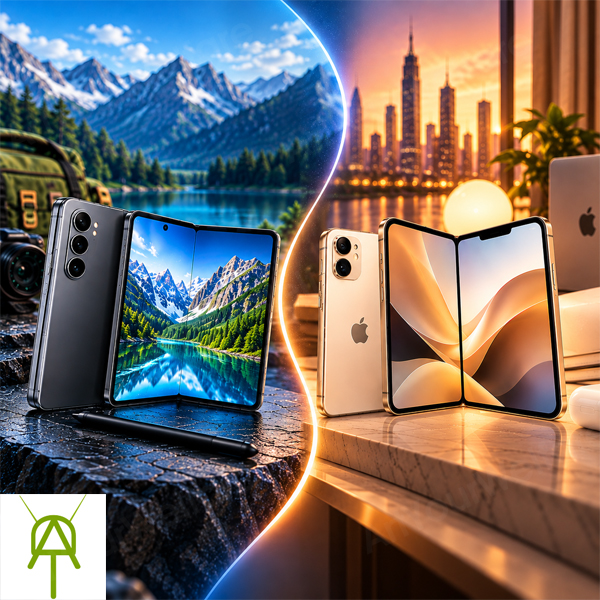
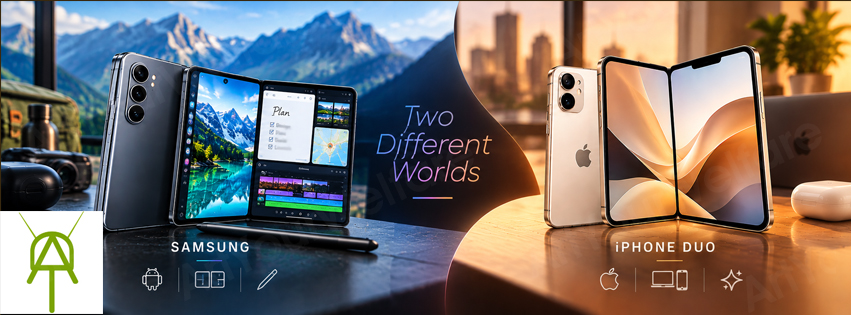
Remember when folding phones felt like fragile science experiments that would break if you looked at them wrong? Well, those days are long gone. Over the past few years, brands like Samsung have quietly perfected the recipe, Motorola has carved out a brilliant space of its own, and now Apple has finally crashed the party with the brand-new iPhone Duo. Naturally, if you have been loyal to Android for years, you are probably wondering how Apple’s fresh take matches up against the heavyweights we already know. The Samsung Galaxy Z Fold vs iPhone Duo debate is honestly one of the most exciting tech clashes we have seen in ages because it pits two completely different operating philosophies against each other.
Samsung Galaxy Z Fold vs iPhone Duo: The Hardware Evolution
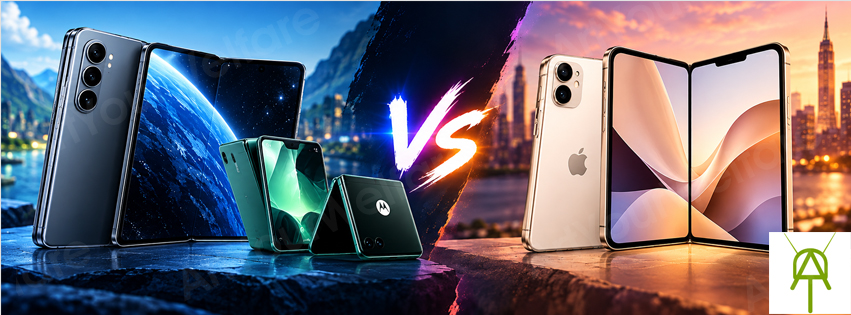
Let’s be real—Samsung’s Fold lineup is basically synonymous with folding tech at this point. Their signature book-style design gives you a regular, comfortable screen on the outside for quick texts or scrolling social media, and then pops open into a massive tablet-style display when you want to dive into media or get some work done.
Now enter the iPhone Duo, which is Apple’s long-awaited answer to the form factor. But before you just stare blindly at spec sheets and core counts, you have to look at real-world use. How do these devices handle your actual daily routine? Think about multitasking on a split screen, streaming videos on a crowded train, snapping quick photos, or jumping between apps without stuttering.
Apart from that, Samsung definitely has the advantage of time here; they have spent years figuring out hinge durability, crease reduction, and software tweaks also. On the other hand, Apple has its greatest superpower: an army of users who are already deeply invested in the Mac, iPad, and Apple Watch ecosystem.
Samsung Galaxy Z Fold 8 vs iPhone Duo: Software and Real-World Multitasking
When you look closer at the Samsung Galaxy Z Fold 8 vs iPhone Duo, the software experience is where the real battle begins.
Samsung leans heavily into the open, customizable nature of Android. It lets you run multiple apps side by side, drag and drop files across windows like it is nothing, and basically treat the inner display like a pocket-sized desktop. If you are someone who loves tweaking settings, using custom launchers, and pushing your phone to its absolute limits, Android’s foldable implementation feels incredibly mature.
Apple, predictably, takes a different path. They are banking on smooth iOS animations, rock-solid stability, and flawless device continuity. If you already copy text on your phone and paste it instantly onto your MacBook, staying inside Apple’s polished ecosystem is a massive draw. It really comes down to whether you prefer Android’s raw productivity power or iOS’s seamless, unified comfort.
Motorola Razr Fold vs iPhone Duo: Mixing Up the Android Space
Of course, Samsung isn’t the only brand holding down the fort for Google’s operating system. The Motorola Razr Fold vs iPhone Duo comparison gives shoppers another fantastic lane to explore.
Motorola has quietly put out some incredible folding hardware lately, injecting some much-needed competition into a market that could easily have turned into a monopoly. When you are weighing these devices against Apple’s debut, practical things like screen creases, hinge strength, battery drain, camera quality, and price tags matter just as much as the logo on the back. Motorola often undercuts the competition on price while offering fun, stylish exterior designs, giving everyday buyers a great alternative to Samsung.
Android Foldable vs iPhone Duo: The Platform War Heats Up
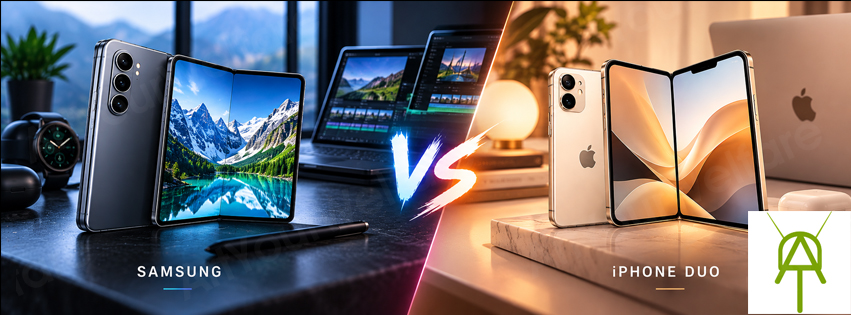
Zooming out a bit, the broader Android foldable vs iPhone Duo rivalry isn’t just about a couple of phones—it is a full-blown platform war.
Android manufacturers have had years to mess around with different form factors, giving you everything from horizontal book-style foldables to sleek flip phones. Apple fans haven’t traditionally had that kind of variety within the standard iPhone family. Bringing a foldable into the mix changes the game completely for iOS users and sets up a fierce battle in the ultra-premium tier.
Android remains the undisputed champ for anyone who values deep customization, side-loading, and extreme multitasking flexibility. Meanwhile, Apple’s strength is making complex hardware feel effortlessly simple through tight integration across its entire product lineup.
Best iPhone Duo Alternatives for Android
If you look at Apple’s new foldable and think it looks cool, but you refuse to leave Google’s ecosystem, the market is packed with the best iPhone Duo alternatives for Android.
Samsung’s flagship foldables remain the gold standard if you want elite multitasking and top-tier engineering. Meanwhile, Motorola offers a refreshing alternative flavor for folks who want something a bit different. Ultimately, your choice comes down to what you care about most: massive screen real estate, top-tier cameras, all-day battery life, software style, or how much pain your wallet can take.
Which Foldable Experience Makes Sense for You?
Specs on paper only tell half the story. A massive inner screen is completely useless if apps stretch out and look terrible, and a super-fast processor only matters if the software lets you actually use it.
Samsung brings unmatched market maturity, Motorola adds great alternative hardware choices, and Apple introduces a massive new ecosystem rival that will force everyone to step up their game. Honestly, this level of fierce competition is a huge win for us as consumers because it pushes brands to innovate faster on batteries, hinges, and cameras.
Conclusion
The Samsung Galaxy Z Fold vs iPhone Duo showdown proves just how far mobile technology has come. Samsung brings raw Android flexibility and years of hardware evolution, while Apple translates the classic, polished iPhone experience into a brand-new shape, all while Motorola keeps the Android side diverse and exciting.
Instead of just buying into marketing hype or brand loyalty, smart shoppers should look closely at the apps they use every day, their workflow needs, camera habits, and budget. Apart from that, both Android and iOS now going toe-to-toe in the foldable world, finding a premium device that genuinely fits your life has never been easier.